Alleysha: A Script Handwritten Font for Elegant Branding
I was staring at a blank brand board, the kind that feels like a canvas waiting to be filled with character and personality. It was for a boutique identity project—a small, independent creative studio looking to stand out in a saturated market. I had spent hours sketching logo concepts, thinking about how to translate their ethos into something visual. That’s when I pulled out Alleysha. It wasn’t just a font; it was a statement.
Alleysha for Logo Design and Brand Identity
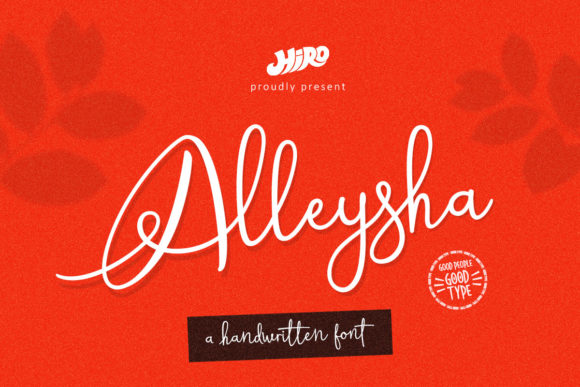
Alleysha is an elegant and flowing handwritten font that immediately caught my eye. Its varying baseline and smooth lines gave it a natural, organic feel that felt perfect for a creative studio aiming to exude warmth and authenticity. I tested it on a few logo drafts, adjusting weights and spacing to see how it would look in different contexts. What stood out was its ability to balance formality with approachability—something I found particularly useful for a brand that wanted to feel both professional and personable.
I paired Alleysha with a clean sans serif font for body text, creating a contrast that highlighted the handcrafted nature of the brand while ensuring readability. The PUA encoding allowed me to access all glyphs and swashes easily, which came in handy when designing a tagline or adding subtle flourishes to the logo. It’s clear why Alleysha is a favorite among designers who value both aesthetics and functionality.
Alleysha for Packaging Design and Product Labels
A few days later, I was working on packaging mockups for a skincare product line. The client wanted something that felt luxurious but not too stiff. Alleysha fit the bill perfectly. Its gorgeous glyphs and flowing curves added a touch of sophistication that elevated the design without overwhelming it. I used it for product labels, ensuring that the font remained legible even at smaller sizes.
The varying baseline was especially useful here, as it allowed for a more dynamic layout. I experimented with placing Alleysha in different sections of the packaging—on the front label, the back panel, and even the side tag. Each time, it maintained its elegance and readability, which is no small feat for a script font. It’s worth noting that Alleysha’s PUA encoding made it easy to customize the look further, allowing for greater flexibility in design.
Alleysha for Social Media Graphics and Web Design
When it came to social media graphics, Alleysha proved to be a versatile choice. I used it for headers, captions, and call-to-action buttons across Instagram and Facebook. Its flowing lines and soft curves created a sense of movement that felt engaging and modern. I also tested it on a website header, where it worked well as a display font without sacrificing clarity.
One thing I appreciated was how Alleysha performed across different platforms. Whether it was a high-resolution print ad or a low-resolution mobile screen, the font retained its quality. This is important for brands that need to maintain consistency across multiple channels. I also found the webfont availability to be a practical addition, making it easier to implement in digital projects without compromising performance.
Alleysha for Business Cards and Editorial Design
For business cards, Alleysha brought a level of sophistication that aligned well with the brand’s identity. I used it for the main text, pairing it with a minimalist sans serif font for contact information. The result was a card that felt both professional and unique. I also tested it in editorial design, using it for headlines and subheadings in a magazine layout. Its flowing nature added a sense of rhythm to the text, making it feel more inviting and less rigid.
However, I did notice that Alleysha might not be the best choice for long body text or formal corporate use. Its decorative elements can sometimes make it feel too stylized for certain contexts. That said, it works exceptionally well for short phrases, taglines, and visual accents. As a designer, it’s always good to know your font’s strengths and limitations, and Alleysha definitely has its place in the right projects.
Alleysha for Font Pairing and Commercial Use
When it comes to font pairing, Alleysha pairs beautifully with a variety of styles. I’ve used it alongside serif fonts for a classic, timeless feel, and with modern sans serifs for a fresh, contemporary look. Its versatility makes it a great choice for those who want to experiment with different typographic combinations without losing the essence of the brand.
Before using Alleysha in any client work, I always recommend checking the commercial font licensing. It’s important to ensure that the font is suitable for the intended use, whether it’s for branding, packaging, websites, or print-on-demand products. Alleysha’s PUA encoding and support for multilingual characters also make it a strong candidate for international projects.
In conclusion, Alleysha is more than just a script handwritten font—it’s a tool that can elevate your design work in meaningful ways. Whether you’re creating a logo, designing packaging, or building a brand identity, Alleysha offers a blend of elegance, functionality, and creativity that’s hard to match. For designers who value both style and substance, Alleysha is a font worth considering.